Hair Fall vs Hair Loss: Know the Difference
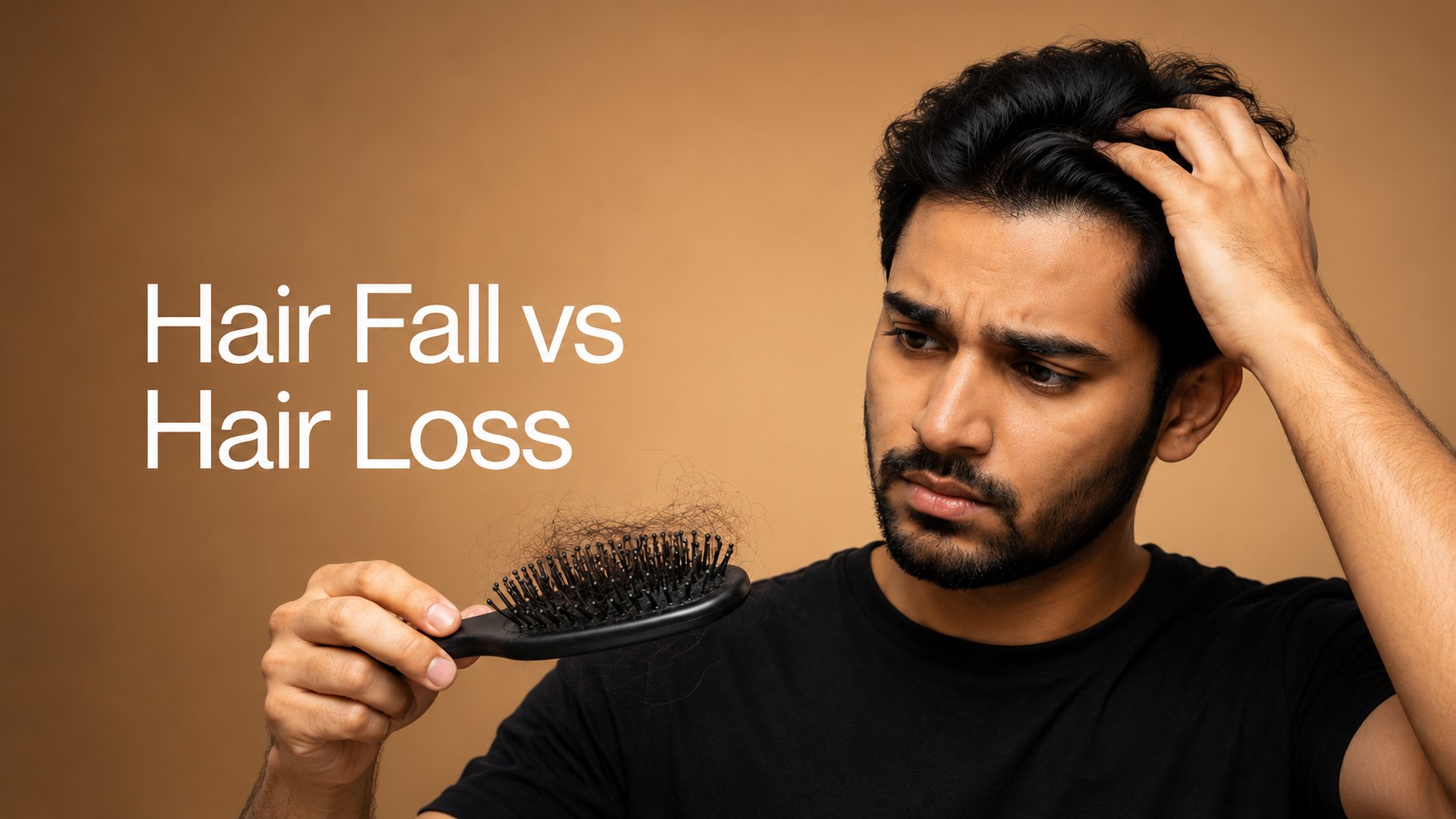
Doctor, my hair is falling a lot. Am I going bald?
This is one of the most common concerns in dermatology, but hair shedding and hair loss are not always the same thing.
Some amount of hair shedding is normal. The important questions are whether you are losing more hair than usual, whether the hair is actually thinning, or whether it is simply breaking.
How Much Hair Shedding Is Normal?
Hair naturally goes through a continuous growth cycle. At any given time, some hairs are growing, while others are resting and eventually shed.
Therefore, seeing some hair on your pillow, comb, or shower floor does not necessarily mean you have a hair-loss disorder.
The concern arises when shedding becomes noticeably excessive or persistent, or is accompanied by visible thinning.
Hair Shedding vs Hair Loss
Excessive Hair Shedding
Sudden, increased shedding is commonly seen in telogen effluvium.
It can occur after:
-
Fever or significant illness
-
Major stress
-
Rapid weight loss or restrictive dieting
-
Certain medications
-
Nutritional deficiencies
-
Hormonal changes
In many cases, the trigger occurs weeks to months before the hair shedding becomes noticeable.
Pattern Hair Loss
In androgenetic alopecia, the main problem is not simply excessive shedding.
The hair follicles gradually become smaller, producing thinner and shorter hairs over time.
This can appear as:
-
Widening of the hair part
-
Reduced density over the crown
-
Receding hairline
-
Progressive thinning
Without appropriate treatment, this process can gradually progress.
What About Hair Breakage?
Sometimes, what looks like hair loss is actually hair breakage. Frequent heat styling, chemical treatments, tight hairstyles, and mechanical damage can weaken the hair shaft.
In this situation, the problem is not necessarily with the follicle; it may be damage to the hair shaft itself.
This is why examining both the scalp and hair shaft is important before deciding on treatment.
Why Supplements Aren't Always the Answer
Hair supplements and biotin are often marketed as universal solutions for hair fall, but supplements are most useful when there is a genuine nutritional deficiency or a specific indication.
Taking multiple supplements without identifying the underlying cause may not solve the problem and can sometimes delay appropriate treatment.
Consider an evaluation if you notice:
-
Sudden or persistent excessive shedding
-
Progressive thinning
-
A widening hair part
-
A receding hairline
-
Bald patches
-
Scalp itching, scaling, or inflammation
-
Hair loss associated with other symptoms
A dermatologist may assess the pattern of hair loss, scalp condition, hair shaft, and medical history, and may recommend investigations when appropriate.
The Bottom Line
Not every hair that falls means you are losing hair permanently. Hair shedding, follicular miniaturization, and hair breakage are different problems and require different approaches.
At our clinic, we first assess the pattern, duration, and possible cause of hair loss before recommending treatment.
Because with hair loss, the correct diagnosis comes before the right treatment.